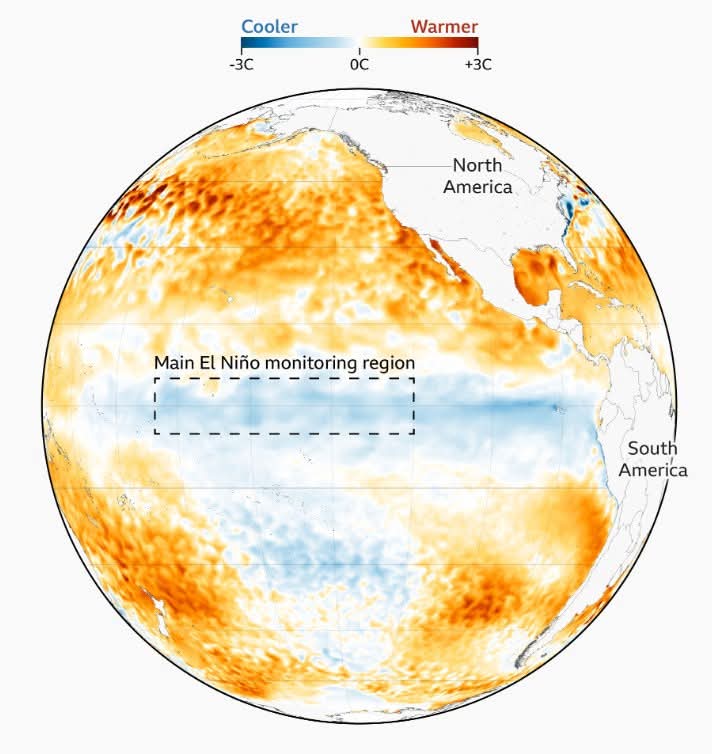
The United Nations has warned that a powerful El Niño weather pattern could develop in the coming months, with scientists fearing it may become one of the strongest events recorded in decades.
While El Niño affects different parts of the world in different ways, Zambia is among the countries that could face some of the toughest challenges if forecasts hold true.
According to climate experts, El Niño often brings below-average rainfall to much of Southern Africa. For Zambia, that usually means delayed rains, longer dry spells, intense heat and a higher risk of drought.
The warning comes as memories of recent drought conditions remain fresh across the country.
Agriculture is expected to be one of the most vulnerable sectors. Maize, Zambia's staple crop, depends heavily on consistent rainfall. If the 2026/2027 farming season experiences poor rains, harvests could suffer, potentially pushing food prices higher and increasing pressure on households.
Energy supply could also come under strain.
Zambia relies heavily on hydroelectric power generated from major water bodies such as Kariba Dam. Reduced rainfall could lower water levels and affect electricity generation, raising concerns about the possibility of renewed load shedding if reservoir levels fall significantly.
Experts are also warning about water shortages and extreme temperatures. Prolonged dry conditions can affect access to clean water, especially in vulnerable communities, while hotter-than-normal temperatures increase health risks and place additional pressure on already stretched resources.
The World Meteorological Organization says El Niño is likely to strengthen as the year progresses. Scientists have detected unusually warm water moving across the Pacific Ocean, a key signal that the weather phenomenon may intensify.
UN Secretary-General António Guterres warned that El Niño could add further pressure to a planet already experiencing record-breaking temperatures due to climate change.
Although it is still too early to predict exactly how severe the event will become, climate specialists say governments, businesses, farmers and households should begin preparing now rather than waiting for conditions to worsen.
For Zambia, the next rainy season could play a major role in determining everything from food production to electricity supply and the cost of living.