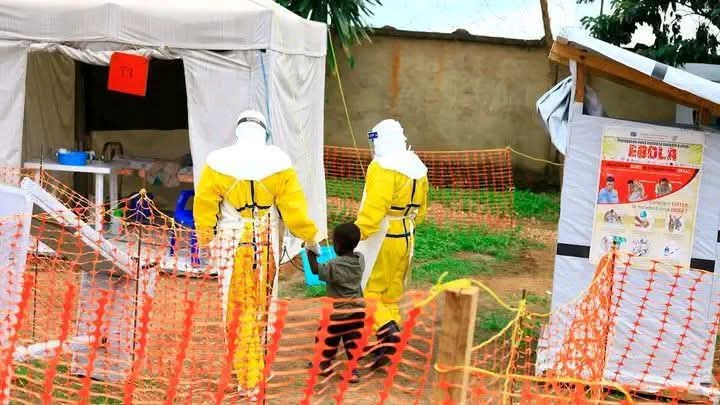
A new Ebola outbreak in the Democratic Republic of Congo has sparked concern across Central Africa after health officials confirmed dozens of deaths and hundreds of suspected infections in the eastern part of the country.
Authorities in DR Congo say at least 80 people have died so far in Ituri Province, with 246 suspected cases reported in areas including Mongwalu, Rwampara, and Bunia.
The outbreak has already started affecting neighbouring countries. Uganda confirmed that a Congolese national infected with the virus died in Kampala after developing hemorrhagic symptoms linked to the Ebola Bundibugyo strain.
According to Congo’s Health Ministry, the suspected first patient was a nurse from Bunia who later died after showing symptoms such as fever, vomiting, bleeding, and severe weakness.
The World Health Organization says laboratory tests in Kinshasa confirmed multiple Ebola-positive samples on Thursday, prompting emergency response measures. WHO has since deployed experts to the affected region while emergency medical supplies are being airlifted into Bunia to strengthen frontline operations.
Health authorities are especially worried because the affected zones are highly active mining areas with constant movement of people between Congo, Uganda, and South Sudan. Bunia itself is a growing commercial city with hundreds of thousands of residents, increasing fears of faster transmission if the outbreak is not contained quickly.
Scientists are also investigating the exact strain involved. Early findings suggest it may not be the more common Ebola Zaire strain, which existing vaccines were mainly designed to fight. Experts warn this could make containment efforts more difficult.
Africa CDC says emergency meetings are now underway with regional governments and global partners to strengthen surveillance and prevent further spread across borders.
This marks the 17th Ebola outbreak recorded in DR Congo since the virus was first identified in 1976.